Our roots
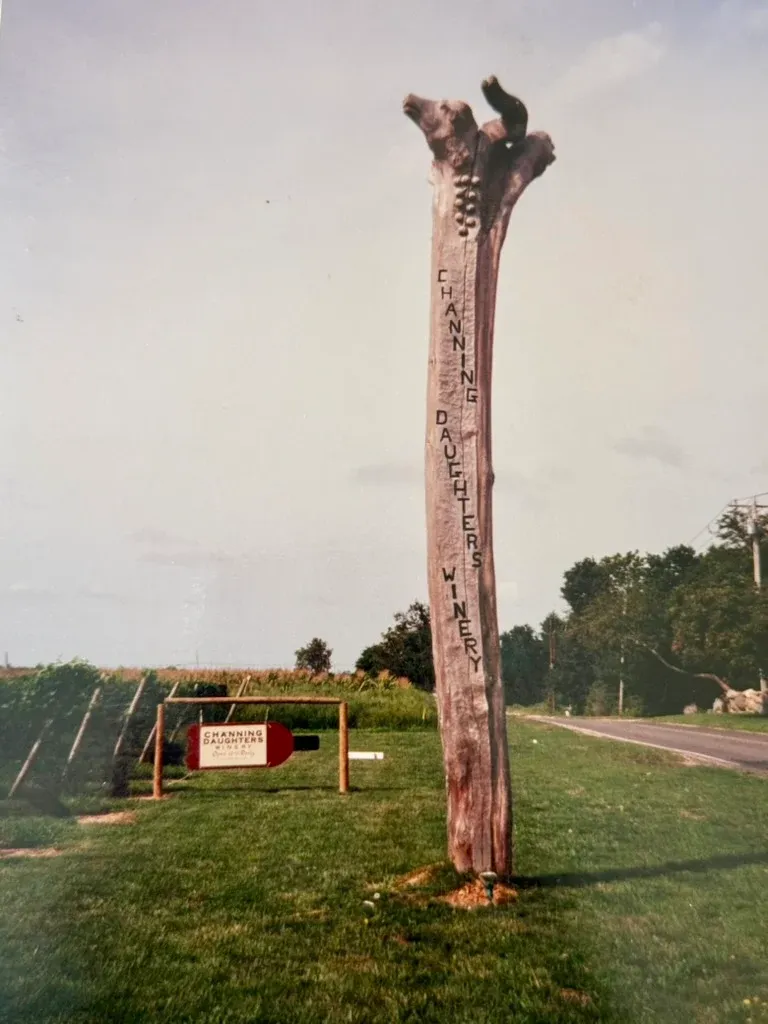
First planted in 1982 by Walter Channing, a sculptor and a venture capitalist, and named for his four daughters, Channing Daughters started out as a dream and an experiment.
Four decades on, it encompasses 28 acres of vines in Bridgehampton, producing 4,000 to 6,000 cases a year. Farmed sustainably, picked by hand, and crafted with care and attention, our wines reflect the terroir of our place and are consumed and celebrated around the world.
Above all else, we seek to produce wines with deliciousness and joy.
- Planted
- 1982
- Vines
- 28 acres
- A year
- 4,000–6,000 cases
* The vineyards
Our farm
The six vineyards on our Bridgehampton farm were planted from 1982 to 2007. The varieties planted in each block reflect the evolution from Walter Channing’s first experiments to our emerging interest in Italian grape varieties to a fascination with field blends and wines to a reversal from single clone plantings of Chardonnay to the inter-planted 10 clone blocks of today. All in pursuit of complexity and deliciousness and reflection of our place.
Channing Experimental Block
1982
1.0
+ The original Chardonnay planting, with Dornfelder and Lagrein.Walter’s original planting of one acre of vines in 1982 was part dream and part experiment. It was about half Chardonnay, with a mixture of Cabernet Franc and Cabernet Sauvignon making up the rest. The half-acre of 33 year old Chardonnay is the oldest remaining vineyard block on the South Fork and forms the backbone of our top of the line, full on Burgundian-style Chardonnay, L’Enfant Sauvage. The remainder of the block has been re-planted to Dornfelder and Lagrein, two earlier-ripening, terrific grape varieties.
Sculpture Garden Vineyard
1987
3.2
+ Merlot interplanted with Blaufränkisch and Teroldego.Originally planted to Merlot in 1987, the Sculpture Garden has become a complanted vineyard with subsequent inter-planting with Blaüfranksich and Teroldego, of Austrian and Italian heritage. This site is relatively flat and the soil type is classic Bridgehampton Silt Loam, making the Merlot very happy with enough available water during the growing season, as it hates dry soils. We make both our Sculpture Garden red blend and our Rosato di Sculpture Garden from fruit picked in mid-October from this block.
Scuttlehole Vineyard
1991
6.0
+ Ten Chardonnay clones on gravelly, sandy loam.Planted to Dijon clones 95 and 96 in 1991, this Chardonnay block is on the rise starting at Scuttlehole Road and descending toward the winery and the flatter Brick Kiln Vineyard. This block is planted on a Riverhead Fine Sandy Loam soil that is fairly gravelly, especially as one travels south to north toward the road. This soil is much more common on the North Fork of Long Island, and is shallower and drier than the Bridgehampton soil. This causes the soil to warm up earlier in Spring, the vines to bud out earlier and ripen a little earlier. Eventually we re-thought the simpler two clone planting and inter-planted from 8 feet to 4 feet between vines with 8 others clones of Chardonnay, selected from around the globe. Of course they are all originally from Burgundy but the genetic diversity created by slight mutations over time gives each clone a slightly different aromatic, acid and sugar profile. This planting goes into the making of both our Scuttlehole Chardonnay and the more complex, oak-inflected Clones blend.
Brick Kiln Vineyard
1991
4.0
+ Chardonnay above a seam of blue-grey clay.The Brick Kiln block is also planted originally to Dijon Chardonnay clones 95 and 96. The flatter soil is Bridgehampton Silt Loam, but contains a slight twist with a distinct 8 inch thick vein of blue-grey clay about 30 inches into the soil profile. This gives the soil a different character than other soils, with mineral differences and rooting differences. It is this clay layer that led us to call the block Brick Kiln, which is the road that ends at Scuttlehole Road just to our Northwest. There is a reason that for the name and it has everything to do with another local road---Clay Pit Road. These veins of subsurface clay were mined to make bricks at the local kiln for the Village of Sag Harbor nearby. Grapes from this block are used for among other wines, our Brick Kiln Chardonnay.
Sylvanus Vineyard
1999
10.0
+ Four sub-blocks, with Sylvanus and Mosaico field blends.The Sylvanus planting is actually a complex of four sub-blocks. Two acres of the namesake vineyard, which is the complanted “Sylvanus Vineyard”, a field-blend of Pinot Grigio, Pinot Bianco, and Muscat Ottonel. The wine named Sylvanus is produced from this block. Moving from east to west, a hill up to 20 feet high emerges and diagonally crosses the landscape. This produces sites within sites for the 1.5 acre Blaufrankisch/Dornfelder block, the 3.0 acre Tocai Friulano block and the 4.0 acre complanted Mosaico block composed of Pinot Grigio, Sauvignon Blanc, Gewurztraminer, Muscat Ottonel, Tocai Friulano and Chardonnay. Fruit from this last section is used to produce the wine of the same name—Mosaico. Each of these blocks are composed of gently sloping sections of Bridgehampton Silt Loam and hilly Riverhead Fine Sandy Loam, adding complexity because the different degrees of ripeness and grape character at harvest from different soil types.
Home Farm Vineyard
2007
3.0
+ Lagrein and Refosco on Bridgehampton silt loam.It has long been a dream to get additional Northeastern Italian red grape varieties into the ground and in the bottle. When we procured an additional 4 acres of land we ordered some Lagrein and Refosco del Pedunculo Rosso and planted it to the south of the new building site. On a Bridgehampton Silt Loam similar to the Brick Kiln site, the vines have done well. Lagrein consistently making very delicious and unique red wines and Refosco truly excellent Roses, year in and year out.
The Channing Experimental Block is inside the Sculpture Garden Vineyard, on its far right side.
A seam of blue-grey clay.
About thirty inches beneath our Brick Kiln Vineyard, an eight-inch seam of blue-grey clay interrupts the silt loam. A small detail underground; the feature that gave this Chardonnay block its name.
A living surfaceAt grade
Permanent mixed cover crops protect our vineyard soil from erosion and support biodiversity.
Bridgehampton silt loamAbove the clay
Brick Kiln occupies flatter ground below Scuttlehole. Both grow Chardonnay, but Scuttlehole’s gravelly, fine sandy loam is a different setting.
The wider soil story
The clay seamAbout 30 in down · 8 in thick
The clay gives this soil distinct mineral and rooting characteristics. The name recalls local clay deposits once used to make bricks for nearby Sag Harbor.
The great unknown
* Drawing compressed below the clay
* What grows in it
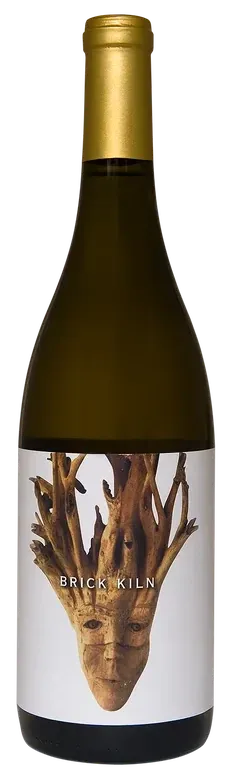
Brick Kiln Chardonnay
2021 · Whites · Brick Kiln Vineyard
Tasting note
The resulting wine is straw-colored with green and gold inflections and is bone dry, medium-bodied, with balanced acidity.
Gorgeous aromas and flavors of pears, golden apples, white flowers, nectarine, lemon curd, brown spice and a saline minerality.
Our 2021 Brick Kiln has a long, round, juicy finish that is persistent with great pleasure.
* Sustainability
We are a founding member of Long Island Sustainable Winegrowing
An independent, third party certified sustainable viticulture program
Healthy vineyards depend on healthy land. We care for ours as a living ecosystem, making decisions that support the vines, the soil and the people who work here. Our aim is to grow exceptional fruit while leaving the land in better condition for the future.
Channing Daughters and our former CEO, Larry Perrine, helped establish Long Island Sustainable Winegrowing alongside Cornell University and fellow local growers and winemakers.
Together, we developed a certification program tailored to the East End’s climate and ecology.
Members must complete a checklist of nearly 200 sustainable grape growing practices that include thoughtful vineyard planning, encouraged and prohibited materials and practices, proper fertilizer and fungicide storage and numerous ecological management options.
Recycling
We recycle 100% of our grape pomace (skins, seeds, pulp) from each harvest and with the addition of our neighbor’s horse manure, create 40 tons of compost every year. In addition, all vine prunings are chopped and return to the earth within our vineyards.
Organic Nitrogen Use
We apply our farm-made compost and other organic sources of nitrogen to our vineyards, eliminating the need for synthetic nitrogen. These slow-release forms of organic nitrogen prevent the leaching of nitrogen into our ground water, creeks, and bays, and contribute to the gradual renewal of our bays.
Cover Crops
Over 90% of each acre of grapevines is under permanent mixed cover crops, protecting the soil from erosion and contributing to the bio-diversity of our farm.
Social Responsibility
All employees are paid a living wage and provided with standard health insurance. Proper work training for safety and advancement is a normal part of work.
Set Standards — highlights
Long Island Sustainable Winegrowing is a 501(c)3 not-for-profit organization that provides education and certification for Long Island vineyards. It was launched in 2012 and is the first third-party sustainable certification program on the East Coast of the U.S.
- Weed control strategies reduce or eliminate herbicide use
- Vine canopy management (leaf removal/hedging, shoot thinning) to help control disease
- Fertilization is limited to 20 lbs/acre/year in order to reduce nitrogen leaching into groundwater
- Mandatory cover crops on the vineyard floor to reduce soil erosion
- Irrigation use is limited
- Integrated Pest Management (IPM) techniques reduce the use of insecticides and fungicides
- Prohibited materials include all restricted use fungicides and insecticides.
- Vineyards must have an ecological compensation area – part of the property must remain in a natural state
- Growers must participate in continuing education
For more information please visit www.lisustainablewine.org
* The property
The Sculpture Garden
The expansive 25 acre sculpture garden is home to Walter Channing’s iconic upside down tree and a gorgeous rainbow pencil fence, among other sculptures. Guests can ask about a tour or host a private event there.
* The people